
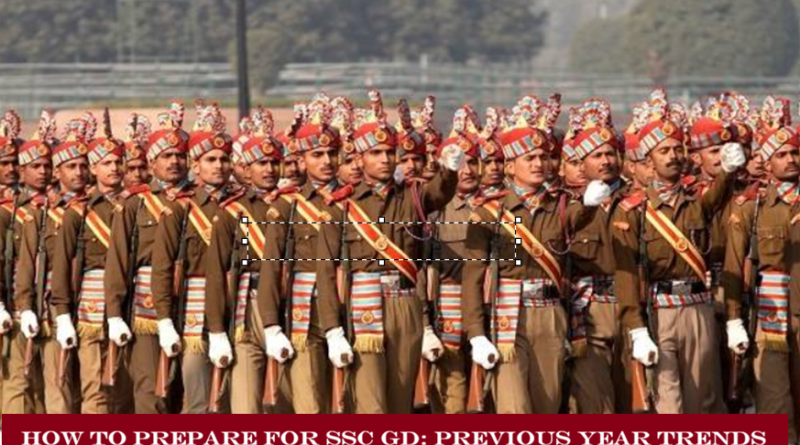
How to Prepare for SSC GD: Previous Year Trends, GK Topics, and Simple Reasoning Practice Steps
SSC GD Preparation Using Real Papers :
Many students prepare for SSC GD by blindly reading books or watching random videos. But the real exam follows a pattern. The questions asked in the last few years give you a very clear picture of what SSC actually wants. If you study with previous year analysis, a clear GK syllabus topic-wise, and a strong reasoning practice routine, your preparation becomes sharper and more focused.
This guide is written like a mentor explaining everything step by step. The aim is simple: help you use your time wisely, understand what the exam paper looks like, and avoid common mistakes that cost marks.
How to Prepare for SSC GD
SSC GD Previous Year Questions Analysis
When you look at SSC GD Previous Year Questions Analysis carefully, you start seeing definite patterns. The exam is not random. Some topics are asked again and again. Some question types are almost fixed. If you ignore old papers, you miss this advantage.
Also Check – SSC GD Preparation Strategy with 3-Month Plan
Why Previous Year Questions Are So Important
Previous year papers help you to:
-
Understand the real difficulty level
-
See which chapters are repeated every year
-
Learn the exact style of questions, not just theory
-
Practise with time-bound real exam pattern
-
Reduce fear, because you already know what to expect
A serious student never skips this step.
What We Learn From Recent SSC GD Papers (General View)
When we study the last few exam cycles (multiple years), some clear trends appear:
-
The paper stays at a basic to moderate level, not extremely tough
-
Questions are often short and direct, with no long-case studies
-
Most questions from Reasoning and Maths are standard types that repeat
-
GK portion mixes static topics (history, geography etc.) with recent events
-
Language section checks simple grammar and understanding, not advanced literature
This means: if you focus on core topics and revise them well, you can handle the exam comfortably.
Typical Question Patterns by Section
Below is a general pattern observed from previous papers (remember, exact count may change slightly year to year, but types remain similar):
-
Reasoning
-
Series (numbers / letters)
-
Analogy
-
Odd one out
-
Coding–decoding
-
Directions
-
Blood relations
-
Venn diagrams / syllogism type logic
-
-
General Knowledge / GA
-
History: freedom struggle, important movements
-
Geography: rivers, states, physical features of India
-
Polity: constitution basics, important articles, important posts
-
Economics: basic terms, schemes, budget topics
-
Science: physics, chemistry, biology at school level
-
Current affairs: awards, sports, government schemes, important days
-
-
Mathematics
-
Number system
-
LCM / HCF
-
Percentages
-
Ratio and proportion
-
Averages
-
Profit and loss
-
Simple interest
-
Time and work
-
Time, speed and distance
-
-
English / Hindi
-
Basic grammar usage
-
Fill in the blanks
-
Synonyms / antonyms
-
One-word substitutions
-
Simple comprehension passage
-
How to Use Previous Year Papers Effectively
Don’t just “solve and forget” old papers. Use them like a diagnostic tool.
You can follow this simple routine:
-
Attempt one full paper in exam-like time
-
Mark each question as:
-
Correct and confident
-
Correct but guessed or slow
-
Wrong or left
-
-
After finishing:
-
Note down topics from wrong and guessed questions
-
Mark those topics in your books
-
Spend the next 2–3 days revising only those topics
-
-
After a week, attempt another paper and check if those topics improved
This is a loop:
Paper → Find weak topics → Revise → Next paper → Check again.
Over time, you will see that your mistakes reduce and your speed improves.
How to Prepare for SSC GD: Previous Year Trends
SSC GD GK Syllabus Topic Wise
General Knowledge often scares students because it looks endless. But a SSC GD GK Syllabus Topic Wise breakdown makes it easier to handle. The trick is to divide GK into clear parts and make small, daily progress.
Big Areas of SSC GD GK
You can divide GK into these simple sections:
-
Indian History
-
Indian Geography
-
Indian Polity and Government
-
General Science
-
Economy basics
-
Current Affairs
Now let us look at each one in a structured way.
1. Indian History (Static GK)
Focus more on:
-
Ancient: basic culture, important kingdoms (only overview)
-
Medieval: famous rulers, important events
-
Modern:
-
Revolt of 1857
-
Indian National Congress sessions
-
Non-cooperation, Civil Disobedience, Quit India movement
-
Important leaders and their roles
-
You do not need to memorise every small thing. Pay attention to important years, events and personalities.
2. Indian Geography
Key areas:
-
Physical features: mountains, plateaus, plains, deserts
-
Indian rivers and their tributaries
-
States and their capitals
-
Crops and climate zones
-
Important national parks and wildlife sanctuaries
Map practice helps a lot. Keep a simple map and mark rivers, states, and key locations.
3. Indian Polity and Government
Important elements:
-
Basic structure of the Constitution
-
Fundamental rights and duties
-
Important articles often asked
-
Important offices: President, Prime Minister, Chief Ministers, Governors
-
Important national bodies (Election Commission, CAG etc.)
You do not need deep law knowledge. Just understand the main framework.
4. General Science
This usually covers school-level science:
-
Physics: motion, light, sound, basic laws
-
Chemistry: everyday chemicals, elements, mixtures, uses
-
Biology: human body, plants, diseases, nutrition
Questions are usually straightforward. Instead of mugging everything, understand concepts in simple language.
5. Economy Basics
For SSC GD, economy questions are mostly basic:
-
Common terms like GDP, inflation, budget, tax
-
Indian currency-related facts
-
Government economic schemes
-
Banking basics
You are not expected to know complex theories. Just stay aware of key terms used in newspapers.
6. Current Affairs
Important coverage areas:
-
Major national and some international events
-
Government schemes and campaigns
-
Awards and honours
-
Sports events and winners
-
Important days and themes (like Environment Day)
A simple habit is:
-
Read a short, reliable daily summary
-
Maintain a notebook of important events month-wise
-
Revise older months again in the last month before exam
Also Read – SSC GD Physical Standards, Training, Posting, Benefits
SSC GD Reasoning Practice Guide
The reasoning section is a scoring area if you practise it properly. A good SSC GD Reasoning Practice Guide should help you improve speed, accuracy and clarity.
Why Reasoning Is a High-Scoring Section
-
Questions are based on logic, not on heavy memory
-
Once you understand a pattern, similar questions become easy
-
Many repeated types can be solved in seconds with practice
-
Even average students can score high if they practise regularly
Important Topics to Cover in Reasoning
You should definitely cover:
-
Number / alphabet series
-
Analogy (word, number, figure)
-
Odd one out
-
Coding–decoding
-
Linear and circular arrangement (simple level)
-
Directions
-
Blood relations
-
Ranking / ordering
-
Venn-diagram based questions
These topics frequently appear in previous SSC GD papers.
Step-by-Step Practice Approach
You can follow this simple strategy to build reasoning power:
-
Start topic-wise
-
Pick one topic (for example, number series)
-
Learn the basic idea with 2–3 solved examples
-
Try solving 15–20 questions of that topic
-
-
Move to mixed sets
-
Once you finish a few topics, mix questions from different topics
-
This simulates exam pattern, where topics are not in order
-
-
Practise with a stopwatch
-
Try solving, for example, 20 questions in 20 minutes
-
Slowly reduce the time as you improve
-
-
Maintain a mistake notebook
-
Every time you make a mistake, write:
-
Question type
-
Where you went wrong (misread, calculation, logic)
-
-
Review this list weekly
-
This habit ensures you do not repeat the same error again and again.
Also Read – SSC GD Salary Details with Allowances
Common Mistakes in Reasoning and How to Avoid Them
Students often lose marks in reasoning due to small errors:
-
Misreading the question
-
Confusing left/right directions
-
Forgetting conditions in puzzles
-
Rushing through series questions without checking logic
To avoid this:
-
Read the question twice if needed
-
Underline key words (like “to the left of”, “between”, “immediately”)
-
For puzzles, rewrite the data neatly in table or diagram form
-
For series questions, check if the pattern is consistent before marking the answer
Daily Reasoning Practice Routine (Example)
You can use a simple daily schedule:
-
10 minutes – quick revision of one old topic
-
20 minutes – fresh practice from one current topic
-
10 minutes – mixed questions from previous papers
In 40 minutes, your reasoning will keep getting sharper each day.
How to Study Smart, Not Just Hard
To make your SSC GD preparation strong and trustworthy:
-
Follow a fixed routine, not random study days
-
Use authentic books and official notifications for exam pattern
-
Regularly solve previous year papers to stay close to reality
-
Keep a simple diary of progress, writing what you studied each day
-
Take care of your health, sleep, food and mindset, because they all affect performance
This is how real toppers prepare: clear basics, regular practice, honest self-checking.
Conclusion : How to Prepare for SSC GD
The SSC GD exam becomes much more manageable when you combine three things:
-
Smart study using SSC GD Previous Year Questions Analysis
-
Structured coverage of SSC GD GK Syllabus Topic Wise
-
Regular work guided by a solid SSC GD Reasoning Practice Guide
You do not need complex tricks or fancy words. What you truly need is clarity, consistency and honest preparation. If you follow a simple plan, revise regularly, learn from every paper you solve and maintain a calm mind, your chances of clearing the exam will grow naturally day by day.
If you want, next I can prepare a separate 2000-word article only on “SSC GD GK Syllabus Topic Wise” with tables, micro-topics and chapter-wise weight ideas in the same human and AdSense-safe style.
Also Read – IB MTS Salary 2025, Pay Structure